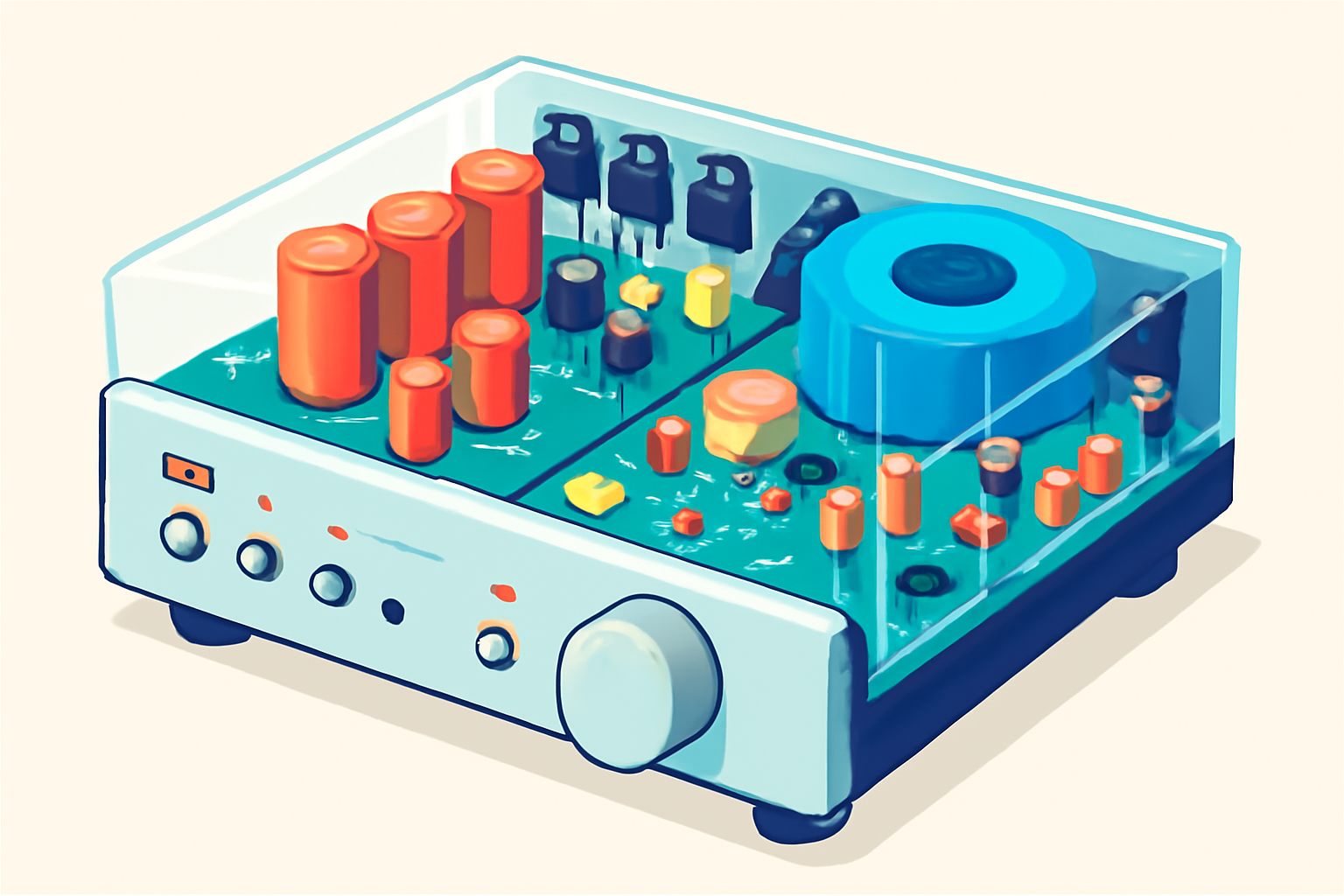
When your amplifier stops working or doesn’t sound quite right, it can be frustrating. But do you know what usually fails inside an amplifier? Understanding common amplifier failures can help you identify problems faster and maybe even save repair costs. Let’s take a closer look at the usual culprits that cause amplifiers to fail, whether you’re dealing with a guitar amp, home audio amplifier, or any other type.
Common Components That Fail in Amplifiers
Amplifiers are a mix of electronic parts working together to boost sound signals. Even though they are built strong, some parts tend to wear out or break over time. Here are the most common components that usually fail:
Capacitors – The Usual Suspects
Capacitors store and release electrical energy inside your amplifier. They help smooth out the sound signal and power flow. After a few years, capacitors can dry out, leak, or bulge, which causes poor performance or total failure. If your amp starts to hum, crackle, or loses power, bad capacitors may be the reason.
Transistors and ICs – Amplifier Powerhouses
Transistors and Integrated Circuits (ICs) amplify the sound signals. They deal with a lot of current under heat stress. If they get too hot or receive a power spike, they can burn out or short circuit. When this happens, your amp might cut out sound completely or sound distorted and weak.
Resistors and Diodes – Small Parts, Big Role
Resistors control electrical flow, while diodes protect against voltage spikes. Usually, they don’t fail often but can sometimes burn out if the amp gets overloaded or overheats. Broken resistors or diodes can cause your amplifier to behave erratically or fail to turn on.
Potentiometers and Switches – The User Controls
These are the knobs and switches that control volume, tone, and power. Dirt, dust, or wear and tear can cause them to become scratchy, unresponsive, or broken. If your volume knob is crackling or the amp doesn’t switch on properly, these parts may be the problem.
Why Do Amplifier Parts Fail?
Now that you know which parts fail the most, you might wonder why they break in the first place. Amplifiers face several conditions that speed up failure:
Heat Stress
Amplifiers generate a lot of heat because they push power through electronic components. If they’re poorly ventilated or used for long hours at high volume, the heat can damage sensitive parts like transistors and capacitors.
Power Surges and Overload
Sudden spikes in electricity, like lightning strikes or unstable power sources, can fry amplifier parts. Using an amplifier beyond its rated capacity can also overload internal components, causing them to fail.
Age and Wear
Over time, even the best amplifier parts suffer from natural wear. Capacitors dry out, solder joints crack, and moving parts like switches wear down. Regular use and age often lead to slow degradation.
Environmental Factors
Moisture, dust, and dirt can seep into your amplifier and cause corrosion or dirty connections. If you don’t clean and maintain your amp, these elements can make components fail prematurely.
Signs That Tell You What Might Be Wrong
Want to know if your amplifier is giving you clues about failing parts? Here are typical symptoms and what they usually mean:
- No sound or very low volume: This often means a blown fuse, faulty power supply, or broken transistors.
- Distorted or fuzzy sound: Could be bad capacitors, worn-out tubes (in tube amps), or blown speakers.
- Crackling or popping noises: Usually dirty potentiometers or failing capacitors.
- Amplifier shuts off randomly: Overheating or power supply problems.
- Burning smell or smoke: A serious sign of component failure, often transistors or resistors overheating.
If you notice any of these signs, it’s best to turn off your amplifier and have it checked to avoid further damage.
Knowing what usually fails in an amplifier helps you troubleshoot issues and keep your sound equipment working longer. If your amplifier shows strange noises, heat issues, or power problems, check the capacitors, transistors, and user controls first. Regular maintenance and careful use can prevent many common failures.